Marine insulation is not simply onshore industrial insulation adapted to fit a ship. Vessels operate in a different environment altogether, with constant humidity and saltwater exposure, strict maritime fire regulations, tight and curved spaces, and weight limits that rarely apply to a facility built on land. Facilities sourcing insulation for vessels typically need marine insulation suppliers in Dubai who understand these differences well before specifying materials, since a product suited to an onshore plant will not necessarily hold up or pass certification on a ship.
Environmental Exposure: Saltwater, Humidity, and Constant Moisture
Onshore industrial insulation deals with heat, dust, and occasional moisture, but marine insulation is exposed to salt spray and near-constant humidity for the vessel's entire operating life. Materials used at sea need corrosion-resistant facings and jacketing, along with resistance to mold and mildew that would not be a priority for most onshore applications. Insulation that performs well in a dry industrial plant can degrade quickly once exposed to the marine environment, which is why material specification differs from the outset.
Fire Safety Standards Are Governed by Maritime Regulations
Fire safety requirements for marine insulation come from International Maritime Organization regulations under SOLAS, rather than the civil defense or building codes that typically govern onshore industrial insulation. Materials used on vessels usually need to meet non-combustibility standards and low smoke and toxicity requirements, since a fire in a confined space at sea presents a very different risk than one in an open industrial facility on land. This means marine insulation materials often require testing and certification that would not apply to an equivalent onshore product.

Space, Curvature, and Structural Constraints
Onshore piping and equipment tend to follow standardized shapes, which allows for modular, pre-formed insulation sections. Vessels are built around curved hulls, tight engine rooms, and bulkhead penetrations that rarely match a standard shape. Marine insulation typically needs to be custom-cut or moldable to fit these irregular surfaces, which adds a layer of fabrication complexity that most onshore industrial projects do not require. As one of the marine insulation suppliers in Dubai, Lijan Group fabricates insulation panels shaped specifically to hull curvature and tight engine room clearances, rather than relying on standard onshore panel sizes.
Weight Is a Structural and Operational Factor at Sea
Weight has a direct effect on a vessel's stability, fuel efficiency, and load capacity in a way that rarely factors into onshore insulation decisions. Marine insulation materials are often selected specifically to minimize weight while still meeting thermal and fire performance requirements, whereas onshore facilities have considerably more flexibility to prioritize other properties over weight.
Vibration, Movement, and Mechanical Stress
A ship is rarely still. Constant vibration from machinery, combined with rolling and pitching at sea, puts ongoing mechanical stress on insulation and its fastening systems. Marine insulation needs fixings that hold securely under continuous movement, while onshore industrial insulation is generally installed in a stable, fixed environment where this kind of stress is far less of a factor.
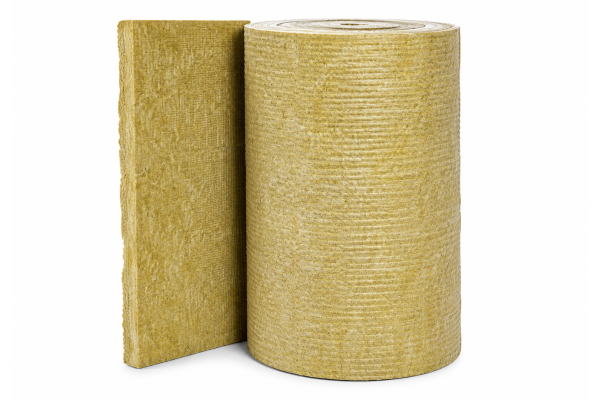
Acoustic Performance Often Matters as Much as Thermal Performance
Engine rooms and machinery spaces on a vessel often sit close to crew quarters and working areas, which makes acoustic insulation as important as thermal performance in many marine applications. Onshore facilities can usually separate noisy equipment from occupied spaces through site layout alone, but a vessel does not have that option, so marine insulation is frequently specified as a combined thermal and acoustic system from the start.
Certification and Classification Society Approval
Marine insulation materials typically need approval from a classification society, such as Lloyd's Register, DNV, ABS, or Bureau Veritas, before they can be used on a vessel. This adds a compliance step that has no real equivalent in most onshore industrial projects. Facilities working with marine insulation suppliers in Dubai benefit from a supplier already familiar with these approval processes, since sourcing uncertified material can delay a project significantly once it reaches inspection.
Working With Marine Insulation Suppliers in Dubai
A supplier capable of handling both onshore industrial insulation and marine-specific requirements needs to account for classification society approval, corrosion-resistant materials, custom fabrication for curved surfaces, and combined thermal and acoustic performance where needed. Lijan Group works across both onshore industrial and marine insulation projects, fabricating jackets and systems suited to the specific environmental and regulatory demands of each.
Conclusion
Marine insulation differs from onshore industrial insulation in nearly every practical respect, from the materials used to resist saltwater and humidity, to the fire testing standards set by maritime regulation, to the custom fabrication needed for curved hulls and tight engine rooms. Facilities sourcing insulation for a vessel benefit from working with marine insulation suppliers in Dubai who understand these differences rather than applying onshore specifications to a marine application. Lijan Group supports both onshore industrial and marine insulation projects across the region, and can be reached through our contact page, by phone at +971 4 267 4966, or via WhatsApp at +971 55 123 5925 to discuss specific insulation material requirements.
FAQs
Can onshore industrial insulation be used on a vessel instead of marine-specific insulation?
Generally not for classed vessels. Marine insulation needs to meet maritime fire safety standards and classification society approval that onshore industrial insulation is not tested or certified for, even if the thermal performance looks similar on paper.
Why does marine insulation need to resist saltwater specifically?
Constant salt spray and humidity at sea accelerate corrosion and material breakdown in ways that rarely occur in a dry onshore industrial setting. Marine-grade facings and jacketing are selected specifically to withstand this exposure over the vessel's operating life.
Does marine insulation need separate fire certification from onshore insulation?
Yes. Marine insulation is typically tested and certified under International Maritime Organization and SOLAS fire safety requirements, which differ from the civil defense or building codes used for onshore industrial insulation.
Why is weight such an important factor in marine insulation?
Weight affects a vessel's stability, fuel efficiency, and load capacity directly, so marine insulation materials are often chosen specifically to minimize weight while still meeting thermal and fire performance requirements.
What is a classification society, and why does it matter for marine insulation?
A classification society, such as Lloyd's Register, DNV, ABS, or Bureau Veritas, sets and verifies technical standards for vessels, including insulation materials. Approval from one of these bodies is typically required before insulation can be used on a classed vessel.