The right roof exhaust fan in Dubai depends on one factor more than any other: how consistent your site's wind exposure actually is, and how much you're willing to trade off electricity cost against guaranteed airflow. Wind-driven ventilators run on zero electricity and need almost no maintenance, but their output rises and falls with the wind. Powered exhaust fans deliver constant, controllable airflow regardless of weather, at the cost of continuous power draw and motor upkeep.
At Lijan Group, we've been designing ventilation and insulation solutions for the industrial and marine sector across the UAE and Saudi Arabia for years, and we were early to bring wind-driven roof ventilators to the MENA region. We manufacture both wind-driven and powered systems, so this comparison isn't about pushing one over the other, it's about matching the right roof exhaust fan in Dubai to your actual building and budget.
How Wind-Driven Ventilators Actually Work:
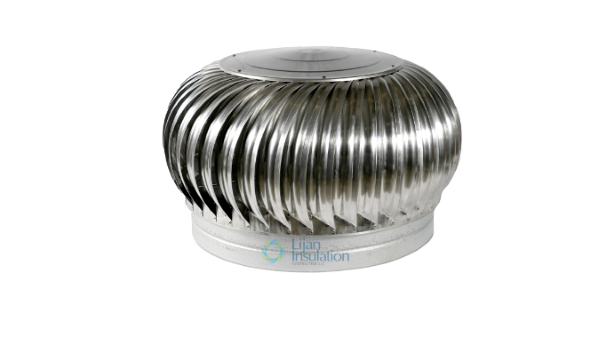
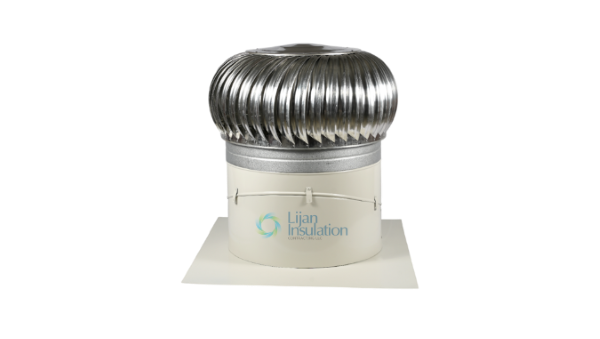
A wind-driven turbine ventilator combines a wind turbine and an extract fan in one unit: wind spins the turbine head, which draws hot, stale air up and out through the roof opening. There's no motor, no electricity, and very few moving parts to fail, which is exactly why they're popular for attics, warehouses, and industrial roofs where a modest, mostly passive ventilation solution is enough. The trade-off is built into the design: performance is directly tied to wind speed, and output drops noticeably in calm conditions.
How Powered Roof Exhaust Fans in DubaiWork:
A powered exhaust fan uses an electric motor to move a fixed, controllable volume of air regardless of outside conditions. That reliability is the whole point: you set the airflow you need, and it delivers that airflow whether it's a windy December afternoon or a still, humid August night. The cost is ongoing: continuous power draw, and a motor that needs periodic servicing over its working life.
Wind-Driven vs Powered, Side by Side:
Wind-driven ventilators are highly energy-efficient with minimal maintenance and very low noise, but airflow depends heavily on wind speed, vent size, and building conditions, meaning performance drops in calm conditions and rises in windier ones. Powered exhaust fans, by contrast, provide more consistent, controllable airflow regardless of weather, making them better suited to applications where guaranteed ventilation matters more than running cost.
Why Dubai's Climate Changes the Calculation:
Here's the detail that matters most for a roof exhaust fan in Dubai specifically: this region regularly sees long stretches of still, calm air, particularly in the peak of summer, which is exactly when a building's heat load and ventilation need are at their highest. A wind-driven ventilator that performs beautifully on a breezy winter day can underperform precisely when you need it most, during a windless 45°C afternoon. This is the single biggest reason industrial clients in the UAE lean toward powered fans, or a hybrid of both, rather than relying on wind-driven ventilation alone.
When a Hybrid System Makes the Most Sense:
The most effective approach for many industrial roofs pairs the two rather than choosing one exclusively: wind-driven ventilators handle general, passive airflow across most of the roof at zero running cost, while powered exhaust fans are placed strategically over heat-generating equipment or areas where guaranteed airflow is non-negotiable. This gives you the energy savings of passive ventilation across the bulk of the building, with powered backup exactly where and when it's needed.
A Detail Worth Knowing: Noise and Long-Term Maintenance:
Turbine ventilators are marketed as near-silent and virtually maintenance-free, and in good conditions that largely holds true. Over years of operation, though, bearings can wear and moving parts can develop noise, so "zero maintenance" is closer to "low maintenance" over a multi-year lifespan. Powered fans, run continuously, have a more predictable maintenance schedule built around motor servicing, which for many industrial operators is actually easier to plan and budget for than an unscheduled turbine repair.
How to Choose for Your Specific Building:
A few questions typically settle the decision: Does your site get consistent wind exposure, or long calm periods, especially in summer? Is the space over sensitive equipment or processes that need guaranteed, constant airflow? Is electricity cost or upfront/maintenance cost the bigger concern for your operation? And is the building large enough that a hybrid approach, wind-driven for general coverage plus powered fans at key points, makes more sense than an all-or-nothing choice?
Why This Matters When Sourcing Your Roof Exhaust Fan in Dubai:
Because we manufacture both wind-driven ventilators and heavy-duty powered industrial fans, including units moving 11,000 to 24,000 CFM in durable GI construction, we're able to specify a system based on your building's actual wind exposure and heat load rather than defaulting to whichever product line a single-focus supplier happens to sell. That's the advantage of working with a manufacturer that genuinely offers both, rather than being sold the one product a supplier has in stock.
Get the Right Roof Exhaust Fan in Dubai from Lijan Group:
Whether your building calls for wind-driven ventilators, powered exhaust fans, or a hybrid system, our team can assess your site's wind exposure and heat load to recommend the right setup. Get in touch with Lijan Group for a ventilation assessment.
FAQs
Which is better for Dubai: wind-driven or powered roof exhaust fans?
It depends on your site's wind consistency. Wind-driven ventilators save on running cost but underperform in Dubai's frequent calm periods, especially in peak summer, while powered fans deliver guaranteed airflow regardless of wind.
Do wind-driven ventilators work in low-wind conditions?
They still provide some ventilation through natural convection, but performance is noticeably reduced compared to windier conditions, which matters in a climate with extended calm stretches.
Are wind-driven ventilators really maintenance-free?
They require very little maintenance compared to powered fans since there's no motor, but bearings and moving parts can still wear over several years of operation, so "minimal" is more accurate than "zero" long-term.
Can I combine wind-driven and powered ventilation in one building?
Yes, and it's a common approach for larger industrial roofs: wind-driven ventilators handle general passive airflow, while powered fans are placed over equipment or zones that need guaranteed, constant ventilation.
How much airflow does an industrial roof exhaust fan typically move?
Powered industrial roof fans commonly range from around 11,000 to 24,000 CFM depending on size and application, while wind-driven ventilator output varies with wind speed and unit size.